
 Everywhere you turn, you hear the same promise: “Just use AI — it can build your website and run your marketing for you.”
It sounds great. It’s also not true. Artificial Intelligence is one of the most powerful tools our industry has ever seen — but it is not a business strategy, and it is not a replacement for experience, judgment, or accountability.
- AI does not know your customers.
- AI does not understand your reputation.
- AI does not carry your liability.
- AI does not protect your brand.
- AI cannot understand consequences.
- AI does not care about your business because it can’t.
What AI Actually Does Well
AI is exceptional at speeding up content drafting, organizing data, recognizing patterns, generating variations, and reducing repetitive work. It can process large amounts of information quickly, surface trends that would take humans much longer to notice, and generate multiple versions of the same idea for testing, refinement, or comparison. This makes it incredibly useful for research support, content outlining, data organization, and early-stage concept development.
It also excels at removing busy-work — the repetitive, mechanical tasks that slow teams down and pull skilled people away from higher-level thinking. By automating portions of production, AI allows human professionals to focus on decision-making, creative direction, strategic planning, and quality control.
In other words, AI accelerates execution — but execution is not the same thing as strategy. Strategy requires understanding people, markets, risk, timing, and consequences. AI can move faster, but it cannot choose what actually matters.
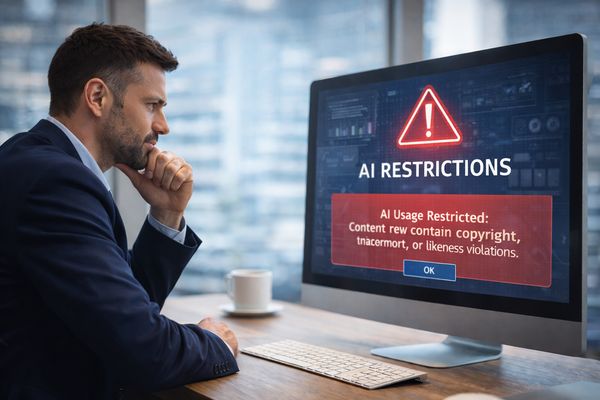 AI Restrictions
AI is a powerful tool — but it has real limitations that matter, especially when accuracy, consistency, and trust are important.
AI’s built-in knowledge base is not live or real-time. It is approximately 18 months behind current events. To provide anything truly current, it has to rely on information that exists online. That means updated answers are dependent on what is publicly available — and there is no built-in way for it to independently verify whether that information is factual, complete, or biased. This alone makes AI fallible by design.
AI also struggles with consistency. The same question asked at different times can produce different answers. The same image request can generate noticeably different results. Even when given identical instructions, output can vary. This makes AI unreliable for brand continuity, long-term messaging consistency, compliance requirements, and repeatable production standards without human control.
Because AI does not understand consequences, liability, or reputation, it cannot be responsible for accuracy, compliance, or outcomes. This is why AI systems openly warn that their responses should be reviewed, verified, and checked by real people.
AI can assist — but it cannot replace judgment, accountability, or responsibility.
Why Strategy Still Requires Humans
True marketing, SEO, and website performance come down to experience and decision-making. They require understanding how buyers behave in your specific market, what your competitors are actually doing, how search engines are truly ranking businesses right now, and how compliance, trust, and long-term reputation intersect. These are judgment calls that directly affect stability, growth, and brand protection — and judgment is something AI does not possess.
Yes, We Use AI
 Modern Web Studios is, well… modern — and we absolutely take advantage of cutting-edge technology. But we are also a company with more than two decades of experience. We have watched “the next big thing” rise, fall, and become obsolete more times than we can count, and what has never changed is the importance of skilled people, evolving knowledge, and real-world experience.
We use AI as a tool to assist our team — to speed production, support research, and improve efficiency — but we will never turn our services over to an algorithm. Your business, your reputation, and your growth deserve human leadership, accountability, and judgment. And frankly, neither you nor your customers should expect anything less.
Ever tried to tell Alexa that she didn’t understand something? How’d that work out for you? Real people still matter.
Where Businesses Get Hurt
Businesses that “hand everything to AI” often end up with:
- Generic content that doesn’t convert
- Thin SEO that fails long-term
- Messaging that feels empty or misaligned
- Reputational risk they didn’t see coming
- No real accountability when things go wrong
It looks efficient on the surface — until it isn’t.
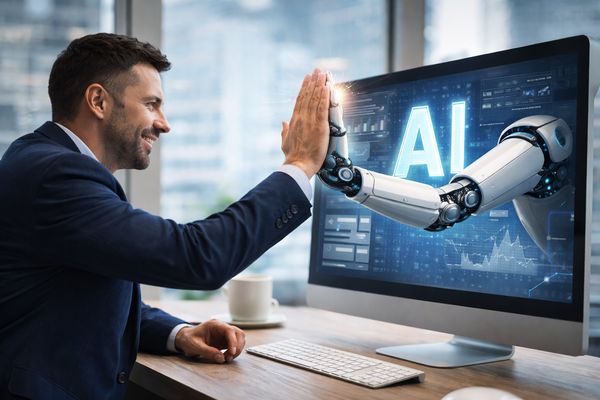 The Right Way to Use AI
The strongest results happen when AI operates under experienced human leadership.
We use AI as a production engine — not a decision engine.
Every strategy, every campaign, every website, and every SEO plan is driven by real people who understand markets, risk, brand positioning, and long-term growth. AI simply helps us move faster, test more, and execute cleaner.
The Bottom Line
AI is not replacing professionals. It reveals the difference between tools and leadership. Knowling how to ask AI is as important as what it produces. The future belongs to businesses that use AI — not as a shortcut — but as a tool in the hand of experience.
NOTE: I ask Chat GPT to write this article without bias. I ask it to be very honest with its responses as to how AI can help and where it has limitations.
